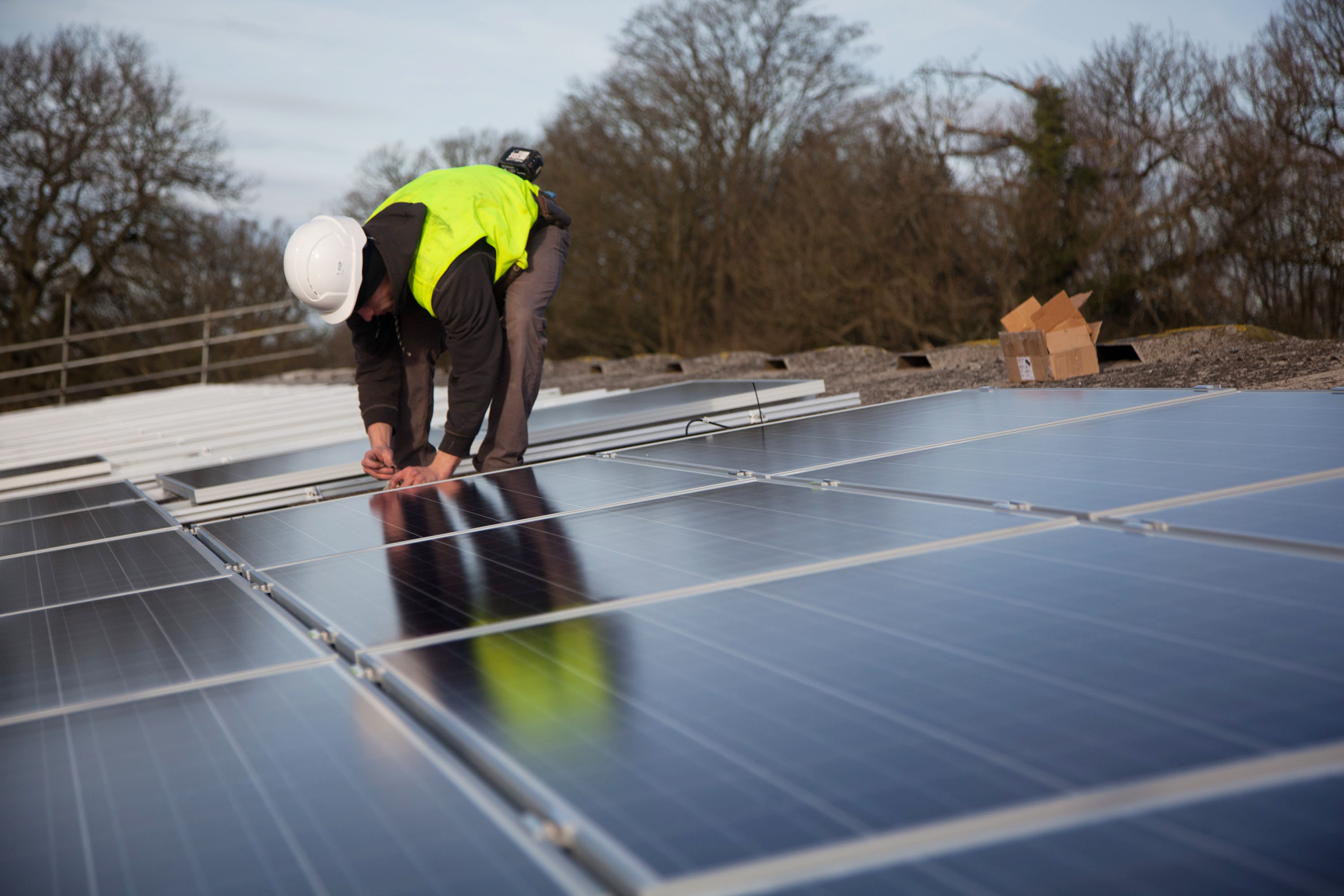
Who Can Install Solar on Landed Properties?
Owners of freehold and leasehold landed properties in Singapore — including terrace houses, semi-detached homes, bungalows, and Good Class Bungalows (GCBs) — can install rooftop solar systems. Unlike HDB flats, landed homeowners own their roof structure and can engage private solar contractors directly.
Condominiums and strata-titled properties require Management Corporation Strata Title (MCST) approval for rooftop installations, which adds complexity.
System Sizing for Singapore Homes
Optimal system size depends on roof area, household electricity consumption, and budget. Typical configurations:
| Property Type | Roof Area (m²) | Recommended System | Annual Generation |
|---|---|---|---|
| Terrace House | 40–60 | 5–7 kWp | 6,500–9,100 kWh |
| Semi-Detached | 60–100 | 7–10 kWp | 9,100–13,000 kWh |
| Bungalow | 100–200 | 10–15 kWp | 13,000–19,500 kWh |
| GCB | 200+ | 15–30 kWp | 19,500–39,000 kWh |
Singapore's average solar irradiance yields approximately 1,300 kWh per installed kWp per year, accounting for cloud cover, panel orientation, and temperature derating.
Cost Breakdown (2026 Pricing)
Residential solar installation costs in Singapore follow a consistent structure across system sizes:
| Component | % of Total | Example (10 kWp) |
|---|---|---|
| Solar Panels | 40–50% | SGD 8,000–10,000 |
| Inverter(s) | 15–20% | SGD 3,000–4,500 |
| Mounting System | 10–15% | SGD 2,000–3,000 |
| Installation Labour | 10–15% | SGD 2,000–3,000 |
| Monitoring System | ~5% | SGD 800–1,200 |
| Permits & Compliance | 2–5% | SGD 500–1,000 |
Total for a 10 kWp system: SGD 18,000–25,000. Costs have declined approximately 8–12% since 2023 due to falling global panel prices.
Installation Timeline
A standard landed-property installation follows these phases:
Site Survey & Design
Contractor conducts roof inspection, shade analysis (using tools like PVsyst or Helioscope), structural assessment, and produces a system design with projected generation.
Proposal & Contract
Detailed quotation with equipment specifications, warranty terms, projected savings, and maintenance schedule. Contract execution.
Regulatory Approvals
Submission to BCA for structural clearance and URA if the installation alters the building's external appearance. SP Group application for grid connection and meter reconfiguration.
Equipment Procurement
Panel and inverter ordering. Most Singapore contractors stock Tier 1 panels (Jinko, Trina, Canadian Solar, LONGi) and string inverters (Huawei, SMA, Fronius).
Physical Installation
Roof-mounting rail installation, panel placement, DC wiring, inverter mounting, AC connection to main switchboard. Typically 2–4 days of on-site work.
Testing & Grid Connection
Licensed Electrical Worker (LEW) inspection, insulation resistance testing, earth fault loop testing. SP Group meter swap to bidirectional meter. Turn-On (TO) approval.
Inverter Selection
Two main inverter architectures are used in Singapore residential installations:
- String Inverters — One central inverter handles the entire array. Brands: Huawei SUN2000, SMA Sunny Boy, Fronius Primo. Cost-effective for unshaded roofs with uniform panel orientation. Lifespan: 10–15 years.
- Micro-inverters — One inverter per panel. Brands: Enphase IQ8, APsystems. Higher upfront cost but better performance when panels face multiple directions or experience partial shading. Lifespan: 20–25 years.
String inverters with power optimisers (e.g., SolarEdge) offer a middle ground — panel-level optimisation with a single central inverter. This configuration is increasingly common on Singapore landed properties.
Maintenance Requirements
Ongoing maintenance for a residential solar system in Singapore is minimal:
- Panel cleaning: 2–4 times per year (Singapore's regular rainfall reduces dust accumulation, but bird droppings and pollen require periodic cleaning)
- Inverter monitoring: Daily via smartphone app (Huawei FusionSolar, SolarEdge Monitoring, Enphase Enlighten)
- Inverter replacement: Typically once at year 12–15 for string inverters, costing SGD 3,000–5,000
- Annual inspection: Recommended by licensed electrician to check cable integrity, connection tightness, and earthing